Color coated steel coil (PPGI / PPGL)
Prepainted coil from 0.12 to 2.0 mm, 600–1,550 mm wide, on 508 mm or 610 mm cores, in zinc or aluminium-zinc substrate and polyester to PVDF paint systems.
Coil is the form that decides the rest of the line
Color coated coil is the input to every roll-forming, slitting and clipping operation downstream, so its dimensions are not independent choices. Core diameter has to match the uncoiler, coil weight has to match the crane, width has to match the profile, and coating mass has to match the atmosphere the finished panel will live in. A coil that is correct in every respect except the core will still stop the line.
We supply prepainted coil in two substrate families. PPGI carries a hot-dip zinc coating, written Z50 to Z275. PPGL carries a 55% aluminium-zinc coating, written AZ30 to AZ150. Both are painted on a continuous line with a primer and a top coat, and both can be supplied with a protective back coat sized to whether the reverse face will be seen.
Thickness runs from 0.12 to 2.0 mm. The thin end serves appliance and panelling work, the middle band of 0.3–0.8 mm serves roofing and wall cladding, and the thick end serves structural and long-span applications where the profile has to carry load rather than simply shed water.
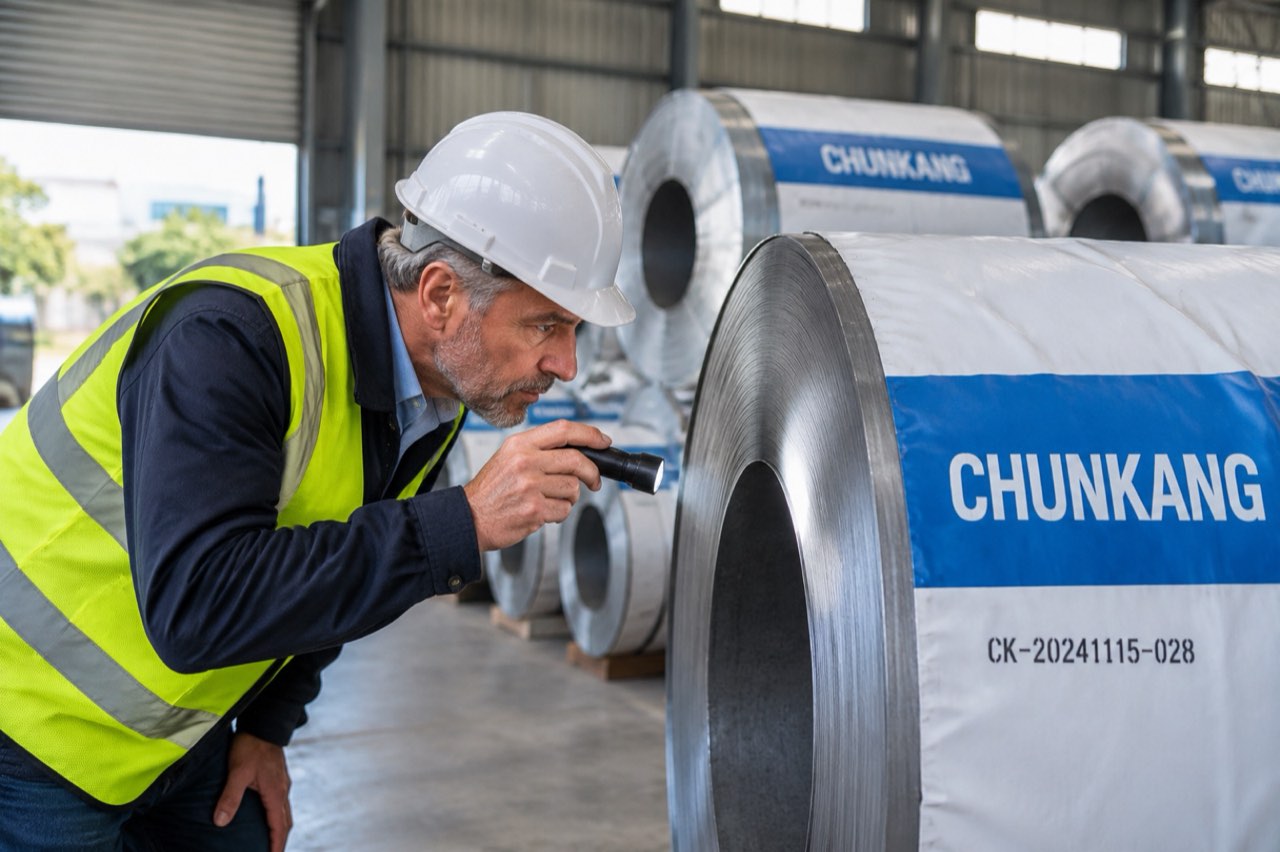
Coil dimensions and coating build
| Property | Range | Notes |
|---|---|---|
| Thickness | 0.12–2.0 mm | 0.3–0.8 mm for roofing and cladding; thickness excludes paint |
| Width | 600–1,550 mm | 750, 914, 1,000, 1,200 and 1,250 mm are the widths ordered most often |
| Inner diameter | 508 mm or 610 mm | Must match the customer uncoiler |
| Coil weight | 2.5–14 t | 3–5 t is the usual export band |
| Zinc coating (GI) | Z50–Z275 g/m² | Two-face total; 180 or above for general outdoor, 275 for coastal and heavy industry |
| Aluminium-zinc coating (GL) | AZ30–AZ150 g/m² | 100 or above for exterior cladding, 150 for severe environments |
| Top coat | 20 µm minimum, 25–40 µm for PVDF and HDP | Below 20 µm outdoor durability drops regardless of resin |
| Back coat | 5–12 µm | 5–7 µm for bonded sandwich faces, 12 µm for exposed faces |
| Surface treatment | Chrome-free passivation, oiled, anti-fingerprint | Selected against the downstream process, not by preference |
Steel grades behind the paint
The paint system gets the attention, but the grade decides how the coil behaves in the roll former. Commercial forming grades are the default; structural grades are specified when the profile carries load.
| Grade | Class | Where it is used |
|---|---|---|
| DX51D, TDC51D | Commercial forming | General roofing, wall cladding, ducting, flashings |
| S250GD | Structural, low | Load-bearing wall panels, light purlins |
| S350GD | Structural, medium | Roof decks, floor decking, structural profiles |
| S550GD | Structural, high | Long-span roofing, high-strength profiles, load-critical decking |
| TS280GD–TS550GD | Structural, alternative designation | Where the project specification uses the TS series instead of S |
Mechanical values are normally quoted at 250–550 MPa yield and 350–600 MPa tensile, with elongation set by the grade. Every shipment can be released with an EN 10204 3.1 mill certificate traceable to the heat number, so the values on the certificate can be checked against the order rather than taken on trust.
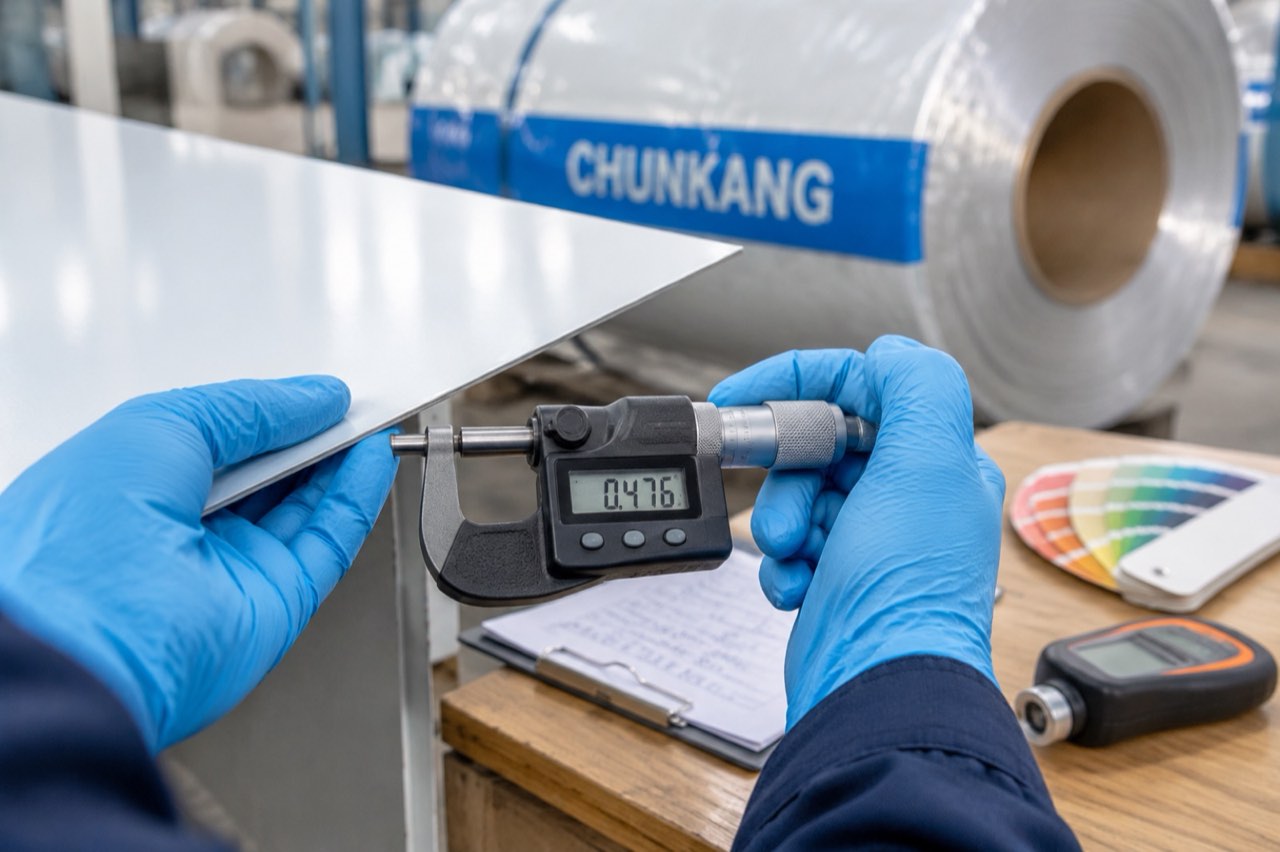
RAL colours held in regular production
These shades cover most architectural and industrial orders. Special colours are matched to a physical sample or RAL reference, with colour control held batch to batch on the same paint system.
| RAL | Colour | Typical use |
|---|---|---|
| RAL 3002 | Carmine red | Roofing and facade accents |
| RAL 3011 | Red brown | Industrial roofing, weathered-look cladding |
| RAL 3020 | Traffic red | Signage, safety cladding, steel structures |
| RAL 5002 | Ultramarine blue | Factory roofing, wall panels |
| RAL 5005 | Signal blue | Plant buildings, equipment housings |
| RAL 1004 | Golden yellow | Warehouse cladding, agricultural buildings |
| RAL 1015 | Light ivory | Residential roofing, light-commercial facades |
| RAL 6005 | Moss green | Landscape-sensitive roofing and cladding |
| RAL 6010 | Grass green | Agricultural and sports buildings |
| RAL 9003 | Signal white | Clean-room panels, appliance housings |
| RAL 7038 | Agate grey | Modern facade, industrial cladding |
| RAL 9006 | White aluminium | High-volume architectural roofing and facade |
| RAL 9005 | Jet black | Premium facade, feature panels |
Export packing and coil handling
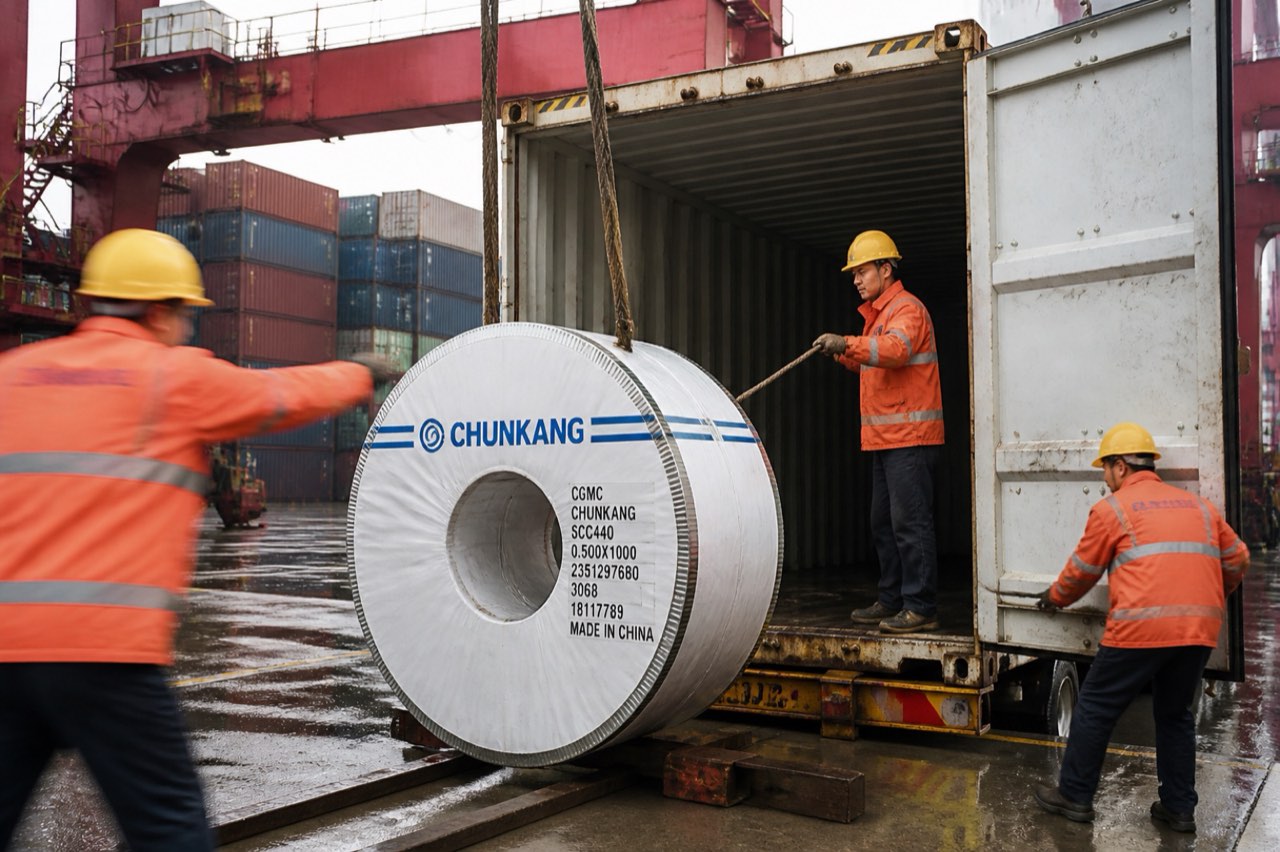
Coils ship eye to sky or eye to wall, and the choice is made at booking rather than at the port. Eye to sky loads vertically and suits coils that will be lifted by crane into a warehouse; eye to wall loads horizontally, spreads weight along the container floor and is the usual choice for long sea routes. State which one you need.
Standard protection is moisture barrier paper, a steel outer skin, circumferential and longitudinal strapping, and a wooden pallet or saddle. For destinations with high humidity or long transit, desiccant and edge protectors are added. A coil that arrives with condensation between the wraps will show it as stain under the paint, not as visible water, so the packing is part of the coating specification rather than an afterthought.
Widths are supplied to order across 600–1,550 mm. If the profile you are running needs a width that is not standard, the coil is painted to that width rather than slit afterwards, which keeps both edges painted and avoids an exposed cut edge in the finished panel.
Frequently asked questions
Which thickness should I order for a roofing coil?
Between 0.3 and 0.8 mm covers almost every roofing and wall application: thin enough to form the profile without cracking the paint at the ribs, thick enough to span the purlin spacing without oil-canning. Above 0.8 mm the coil is normally going into structure or long-span decking rather than a standard roof profile.
What coil inner diameter can you supply?
Coils are wound on 508 mm or 610 mm cores. Tell us which one your uncoiler takes; the wrong core means the coil sits loose on the mandrel and the line has to stop while it is re-chocked.
How much does a coil weigh?
Coil weight is quoted between 2.5 and 14 tonnes, with 3 to 5 tonnes the usual band for export because it loads and unloads with standard equipment and keeps handling damage low. Heavier coils reduce changeover time on a continuous line but need heavier lifting gear at both ends.
Do you supply slit strip as well as full-width coil?
The coil is supplied at the width it was painted. If a downstream line needs a narrower width, slitting is quoted as a separate operation with its own tolerance and edge condition, because slitting after painting exposes an unpainted edge that has to be considered in the corrosion plan.
How do I calculate the weight of coil per running metre?
Multiply width in metres by thickness in millimetres by 7.85, the density of steel in kilograms per square metre per millimetre. One metre of 1,000 mm wide, 0.5 mm coil therefore weighs 3.93 kg before the paint film, which adds a negligible amount. The same formula sizes lifting gear and container loads.
Is the paint film included in the coil weight?
Not in practice. The paint film weighs somewhere in the order of a few tens of grams per square metre, which disappears inside the normal weight tolerance of a coil. Buyers who need a precise shipping weight should use the mill certificate figure rather than the nominal calculation.
What is the minimum order and how is coil priced?
Coil is quoted per tonne FOB China with a 25 tonne minimum, which is the payload of one 20-foot container. Trial orders from 1 tonne are accepted, but a single tonne is priced on request because it does not carry the same mill booking as a container load. The figure depends on coating mass, paint system, colour, thickness and the zinc and aluminium prices at the time of order, so it is confirmed on the quotation rather than published as a list.
Continue from the coil
Coil is cut to length for flat sheet, or roll-formed into a roof profile. Both routes keep the same substrate and paint system.